

While the right to fair housing has been a federal protection in the U.S. for nearly 60 years, that hasn’t always been the case. The legal right to fair housing was not the outcome of any one single action or event, but rather, the result of a long, hard-fought struggle by civil rights activists — a struggle that continues today. That being said, The Chicago Freedom Movement is recognized as a significant and impactful effort in the fight for fair housing. We honor the leaders of the movement, whose work decades ago makes our work possible today.
What was the Chicago Freedom Movement?
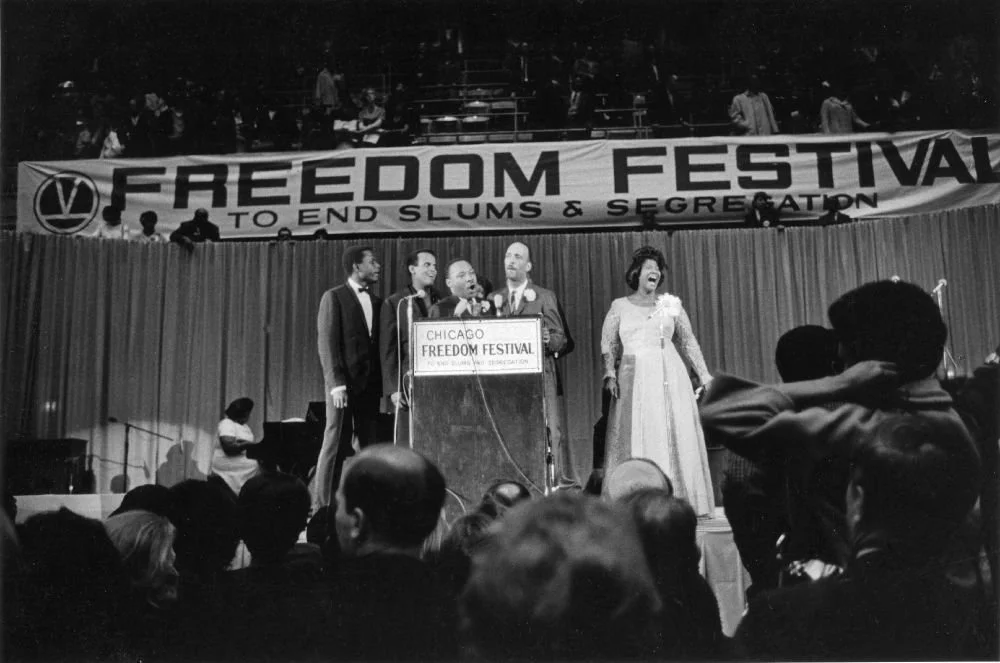
The Chicago Freedom Movement, also called the Open Housing Movement, lasted from 1965 to 1967 and was the most ambitious civil rights mobilization in the North. Until this point, much of the national attention on civil rights was focused on the South, but activists wanted to expose and address the inequitable conditions in the North as well, specifically in the City of Chicago. A coalition of civil rights groups – including the Southern Christian Leadership Conference (SCLC), the American Friends Service Committee (AFSC), and the Coordinating Council of Community Organizations (CCCO) – formed to lead the movement in the mid-60’s.
Why was the Chicago Freedom Movement necessary?
The focus of the Chicago Freedom Movement was to end slums and to eliminate systemic segregation in housing, education, and employment in Chicago. To understand the conditions facing Black Chicagoans at the time, it’s important to know a little history. During the Great Migration, approximately seven million African Americans left the Jim Crow South to move north, in the hopes of finding work and safety. Between 1916 and 1970, over half a million African Americans moved to Chicago. As a result, Chicago’s Black population jumped from two percent to thirty-three percent of the population. Despite making up a significant share of the population, Black Chicagoans faced discrimination in the highly segregated city. After racial zoning ordinances were deemed unconstitutional, redlining and restrictive covenants became common tools for maintaining racial segregation. This forced the majority of the city’s Black residents to live in just eleven of Chicago’s 76 community areas. In addition to being extremely segregated and limited in where they could live, Black Chicagoans had to live in apartments that were often dingy and unsanitary – many of which were rat-infested and lacked heat and hot water.
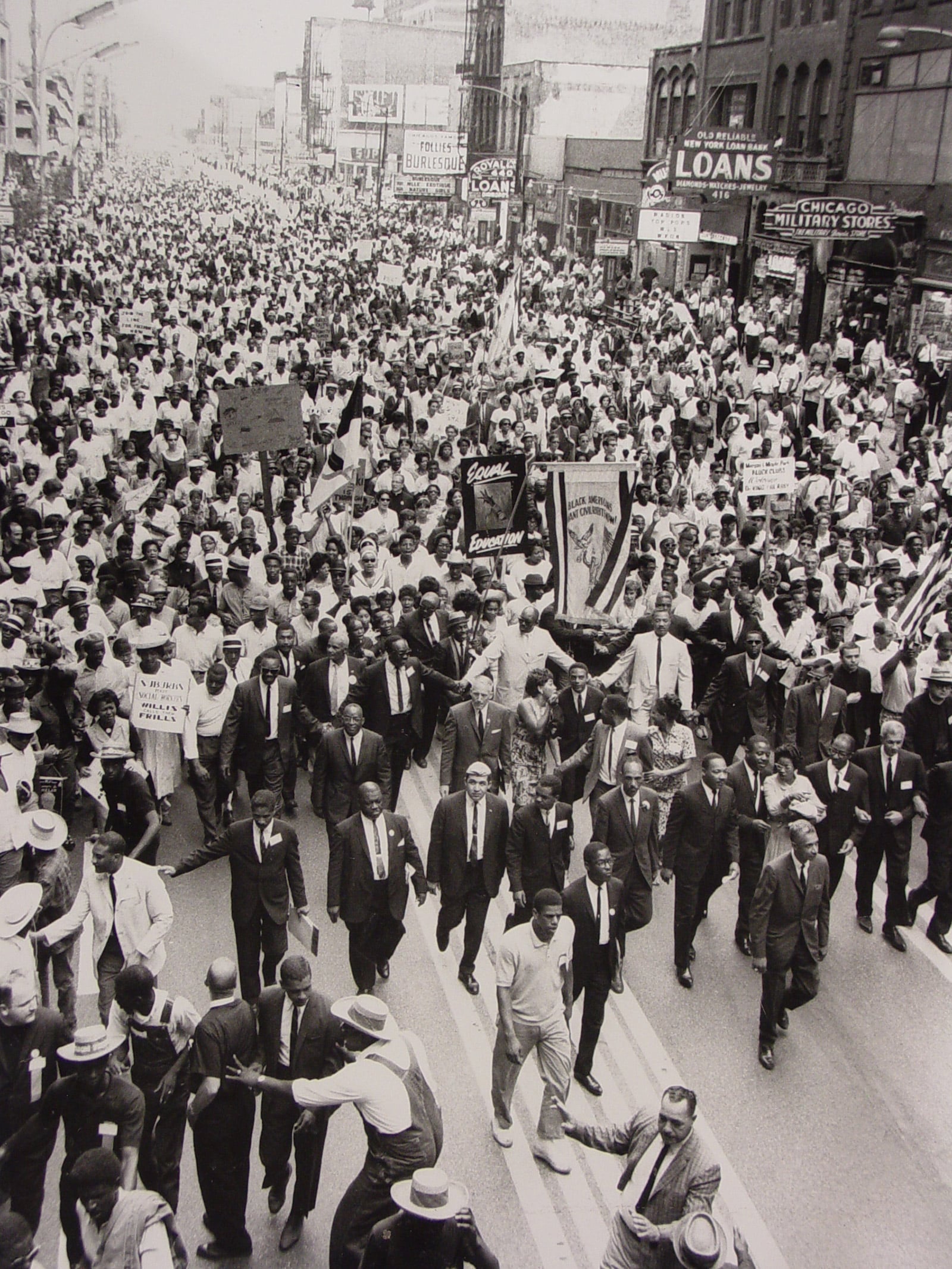
Civil rights activists and concerned community members knew something had to change, and the Chicago Freedom Movement formed in an effort to create that change. Over seventeen months, movement leaders worked to address the inequitable conditions Black Chicagoans were experiencing.
Amid rising tensions, movement leaders persisted.
Prominent leaders of the Chicago Freedom Movement included Dr. Martin Luther King Jr. of the Southern Christian Leadership Conference (SCLC), Al Raby of the Coordinating Council of Community Organizations (CCCO), and James Bevel of the SCLC. Additionally, Bernard LaFayette (AFSC) and Jesse Jackson (SCLC) were both active leaders and organizers in the movement.
When Chicago was decided on as the location of the movement, Dr. King and organizers from the SCLC moved to the city and lived there while working on the campaign. King and his family moved into a West Side ghetto apartment in the 1500 block of South Hamlin, illuminating the deplorable conditions that many Black Chicagoans were subject to.
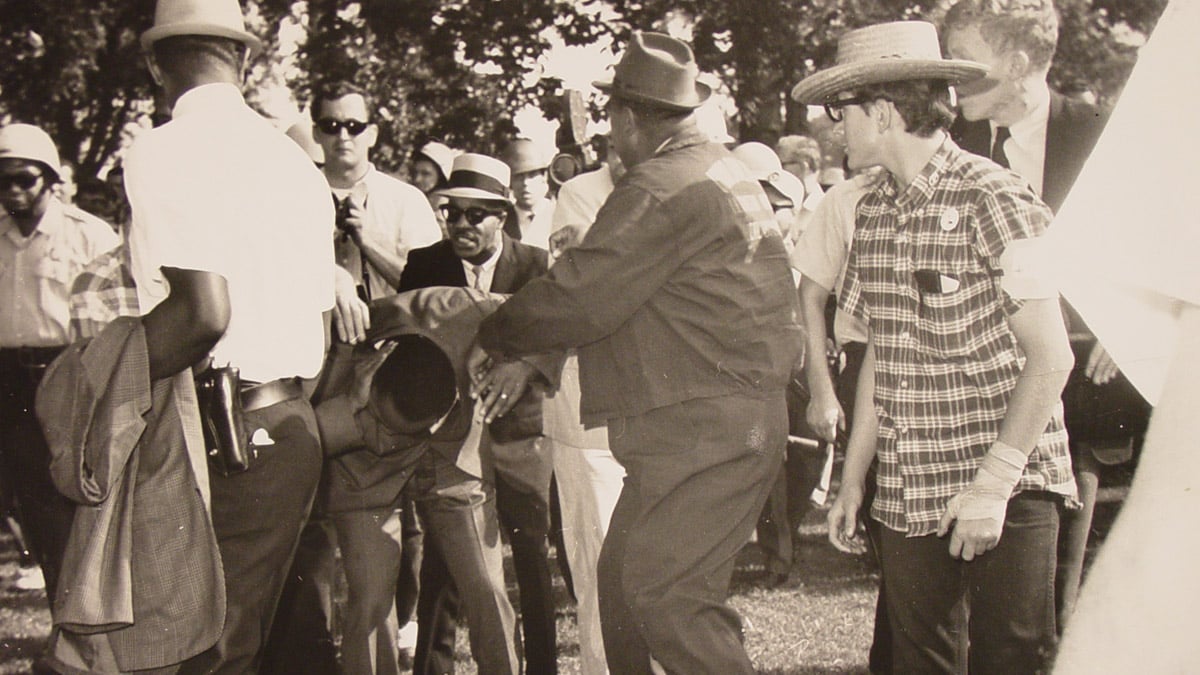
Nonviolent protests, rallies, boycotts, and grassroots community organizing drove the movement, but the marches in hostile white areas are what ultimately forced the city to respond to the campaign’s demands. While the marchers remained peaceful, the same could not be said of the mobs of angry white counter-protesters. Their hostility was shocking even to a civil rights leader as experienced as Dr. King. During an open housing march into the all-white neighborhood of Marquette Park, King was hit in the head with a rock thrown by a white counter-protester. He commented, “I have seen many demonstrations in the South, but I have never seen anything so hostile and so hateful as I’ve seen here today.”
As conflict and tension continued to rise in the city, Chicago mayor Richard J. Daley eventually came to the negotiating table with King and various housing boards. A summit agreement was reached, in which Mayor Daley and city leaders agreed to take steps to address housing discrimination. The Chicago Housing Authority promised to build public housing with limited height requirements, and the Mortgage Bankers Association agreed to make mortgages available regardless of race. While the agreement alone did not achieve the full impact desired by the Chicago Freedom Movement, King called it “the most significant program ever conceived to make open housing a reality in a metropolitan area.”
The Chicago Freedom Movement left a lasting impact.
The Chicago Freedom Movement can be considered a success for a number of reasons. It was instrumental in expanding the civil rights movement’s focus to include systemic segregation and discrimination in northern cities. In addition to prompting positive change at the local level, the Chicago Freedom Movement led to widespread national change as well.
One lasting impact of the Chicago Freedom Movement was the introduction of testing. Activists would send Black and white “testers” to real estate agents and document discrimination and unfair treatment based on race. Today, this practice is widely used by fair housing organizations to more accurately identify and address discrimination, especially in situations where fair housing violations may be more subtle.
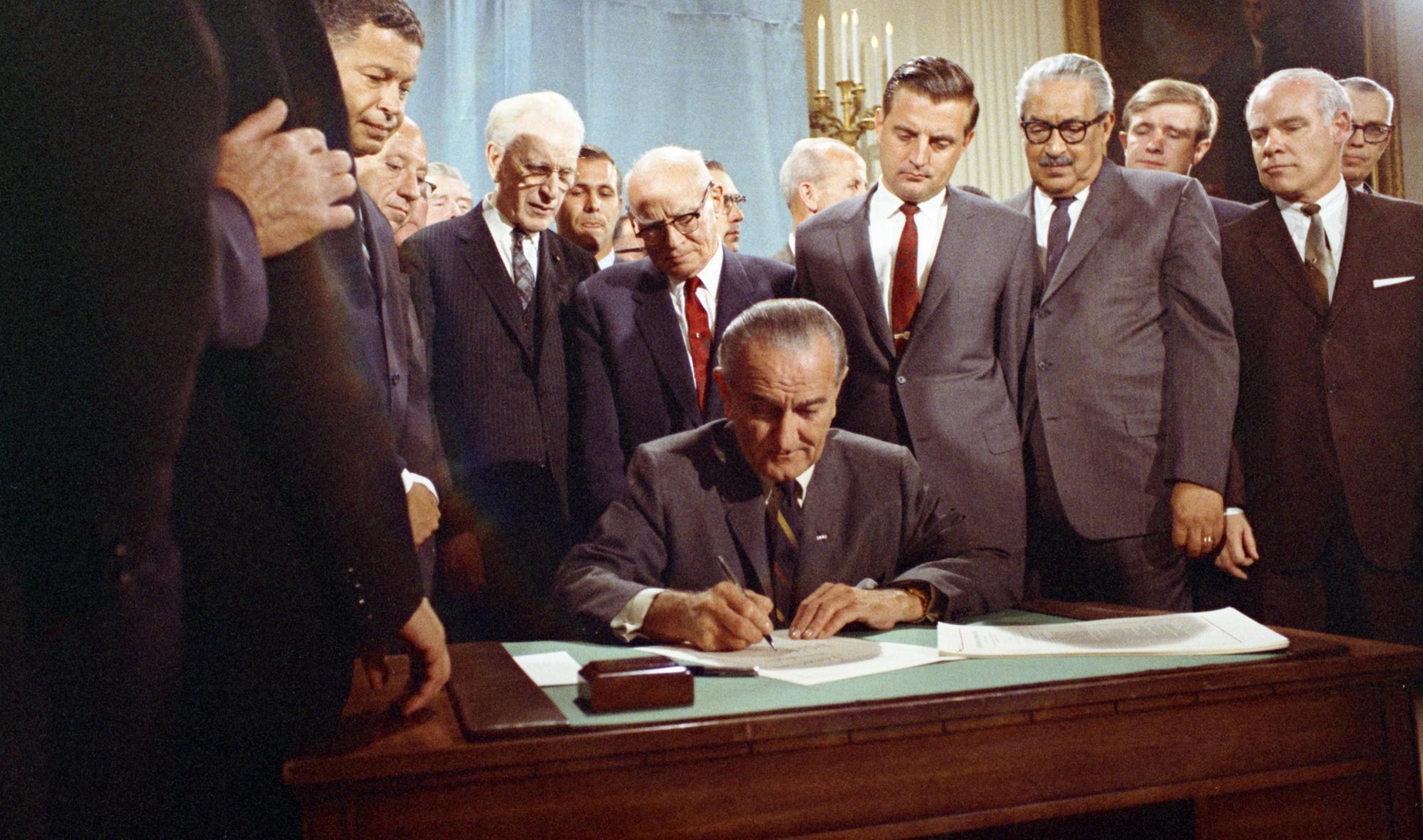
However, the most significant change to come as a result of the Chicago Freedom Movement was the signing of the Fair Housing Act. After Dr. King was assassinated, riots broke out in over 100 cities around the country. This prompted President Lyndon B. Johnson to increase the pressure on Congress to pass the civil rights legislation outlawing housing discrimination. Johnson argued that the Act would be a fitting testament to Dr. King and his legacy in the fair housing movement. The Fair Housing Act was officially signed into law by President Johnson on April 11th, 1968 – exactly one week after the assassination of Dr. King. When it was signed into law, this legislation prohibited discrimination in housing-related transactions based on race, color, religion, and national origin. The Act was later amended to include sex, disability, and familial status, and protects every person living in the United States.
Fifty-eight years later, we are still working every day to fulfill the goals of the Fair Housing Act. But while there is still work to be done, we must recognize and honor the sacrifices of the civil rights leaders and activists who came before us. The spirit of the Chicago Freedom Movement lives on through every person advocating for fair housing today. May it inspire us to never stop fighting for equitable communities where all people can live, free from discrimination.