
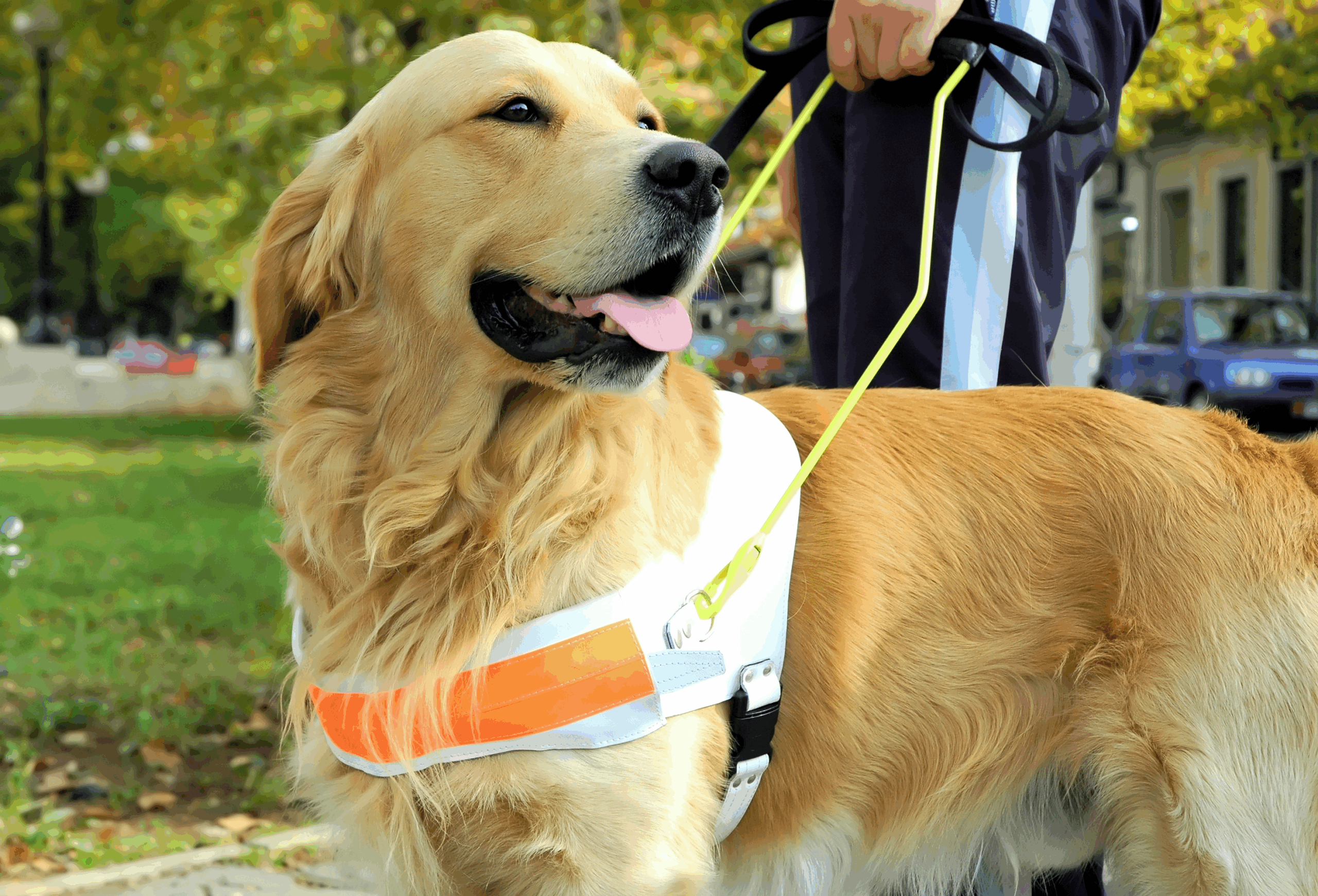
Each year, International Assistance Dog Week is celebrated during the first week in August. This week recognizes the important ways that assistance dogs help people with disability-related needs. Assistance dogs (and other animals) assist hundreds of thousands of people in the United States annually. Fair housing law protects the right to live with an assistance animal when one is needed in connection with a disability. This article covers everything you need to know about assistance animals—who they help, how to request one, where to go for support, and how much of an impact they’ve made in some of our clients’ lives.
What is an Assistance Animal?
According to the U.S. Department of Housing and Urban Development, an assistance animal is “an animal that works, provides assistance, or performs tasks for the benefit of a person with a disability, or that provides emotional support that alleviates one or more identified effects of a person’s disability.” Service animals and emotional support animals (or ESAs) are both valid types of assistance animals under fair housing law. A service animal refers to any animal that is individually trained to do work or perform tasks for the benefit of an individual with a disability, including a physical, sensory, psychiatric, intellectual, or other mental disability. An emotional support animal, on the other hand, can be any animal that does work, performs tasks, provides assistance, or provides emotional support for a person with a disability.
How Do Assistance Animals Help?
Many people need assistance animals for a variety of reasons, and some people may even need more than one assistance animal. While the Fair Housing Act covers a broad range of physical and mental disabilities, the type of assistance animal and support needed will depend on an individual’s unique circumstances. Below is a non-exhaustive list of some ways in which assistance animals can help their owners to navigate life with more ease, safety, and independence:
- A military veteran has PTSD and experiences panic attacks triggered by loud noises. Their service dog is trained to recognize signs of anxiety, provide tactile grounding (like nudging or lying across their lap), and guide the person to a safe space.
- An individual with Generalized Anxiety Disorder experiences chronic worry, restlessness, and panic attacks, especially when alone. Their emotional support dog provides a calming presence and helps reduce anxiety symptoms by providing routine, physical comfort, and emotional stability during stressful moments.
- A person with blindness needs assistance navigating busy city streets or unfamiliar environments. Their service dog, also called a guide dog, helps them avoid obstacles, stop at curbs, and safely cross streets.
- A person struggling with depression finds it difficult to get out of bed, maintain motivation, or connect with others. The responsibility of caring for an emotional support animal encourages daily structure and movement, while the companionship combats feelings of loneliness and hopelessness.
Assistance Animals & Your Fair Housing Rights
Fair housing law recognizes assistance animals as reasonable accommodations, not pets. That means that housing providers can never charge pet fees or deposits for an assistance animal, even if there is a “no pet” policy in place. Additionally, breed, size, or weight limitations cannot be applied to assistance animals. And while dogs are commonly used as assistance animals, most domesticated animals can be considered assistance animals under fair housing law.
Requesting a Reasonable Accommodation
A person needing an assistance animal can submit a reasonable accommodation request to their housing provider. This can be a verbal or written request, although it’s always a best practice to put requests in writing. While a housing provider cannot ask questions about the nature or extent of a tenant’s disability, they may ask for verification. This can come in the form of a letter from a care provider (physician, mental health professional, social worker, case manager, etc.), or from another reliable person who knows about the person’s disability.
In most cases, housing providers should grant reasonable accommodation requests. There are only a few rare circumstances when a housing provider can legally deny a request. If you are experiencing any issues requesting a reasonable accommodation, or have questions about assistance animals and your rights, fair housing advocates can be a helpful resource.
How Fair Housing Can Help
At The Fair Housing Center, we regularly help clients with issues related to assistance animals. Our client advocates offer assistance in a variety of ways, including helping clients navigate the process of requesting reasonable accommodations, informing landlords of their responsibilities under fair housing laws, and supporting you in exercising your right to fair housing. No matter the situation, we want to help you have a successful housing outcome with your assistance animal.
The impact that assistance animals have on their owners’ lives cannot be overstated—but don’t just take it from us. We asked five former clients to share what their assistance dogs mean to them. Here’s what they had to say:
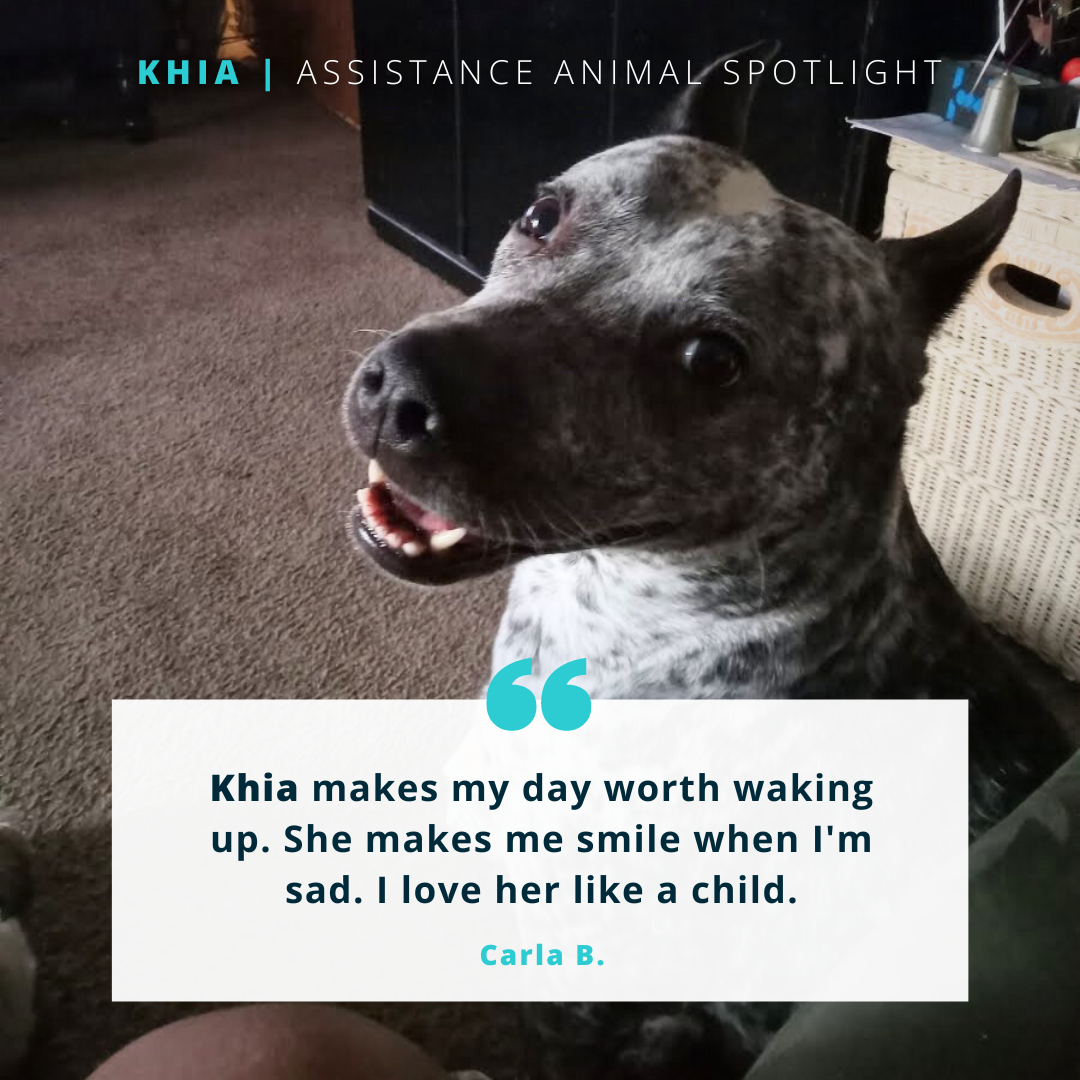
1. “Khia makes my day worth waking up. She makes me smile when I’m sad. I love her like a child.” – Carla B.
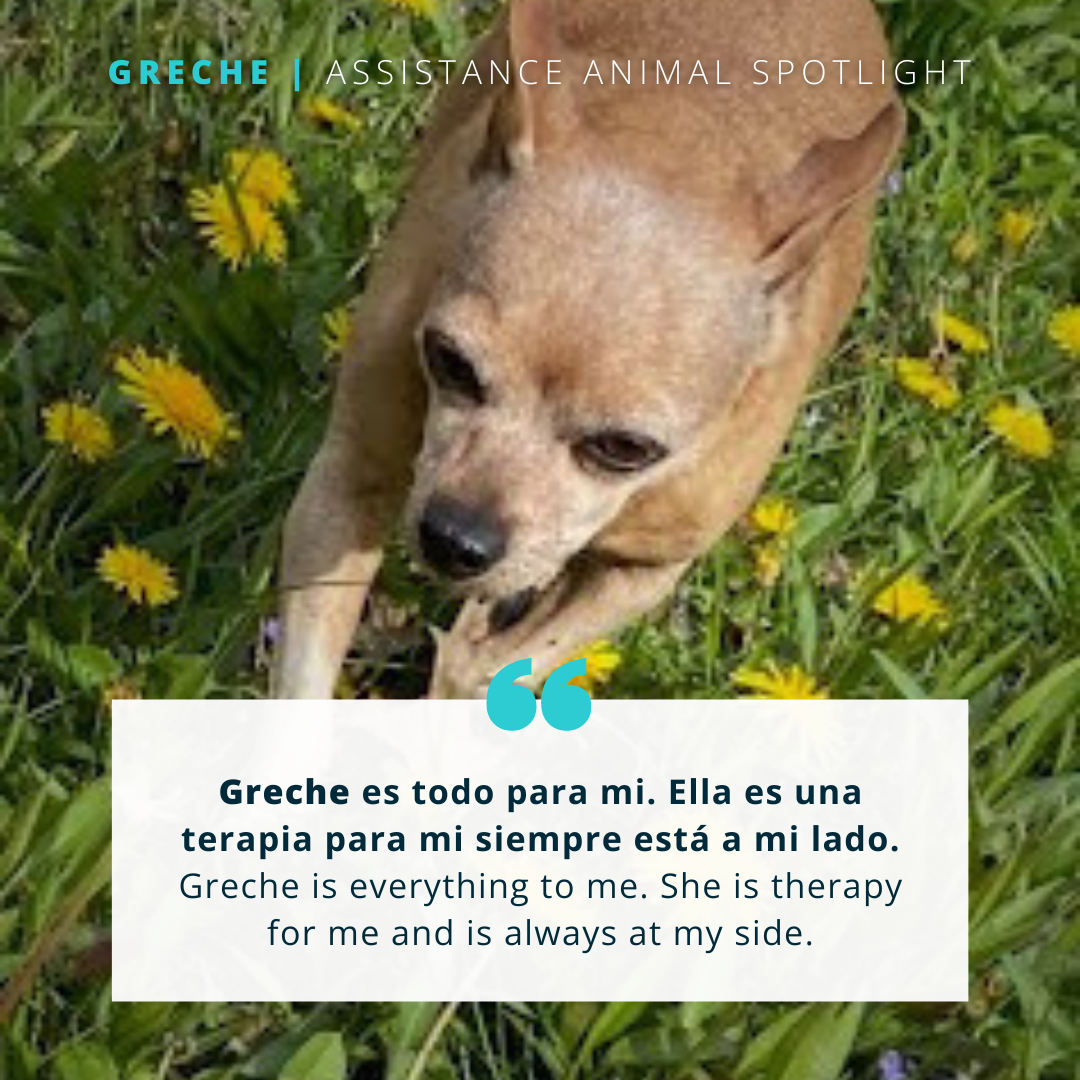
2. “Greche is everything to me. She is therapy for me and is always at my side.”
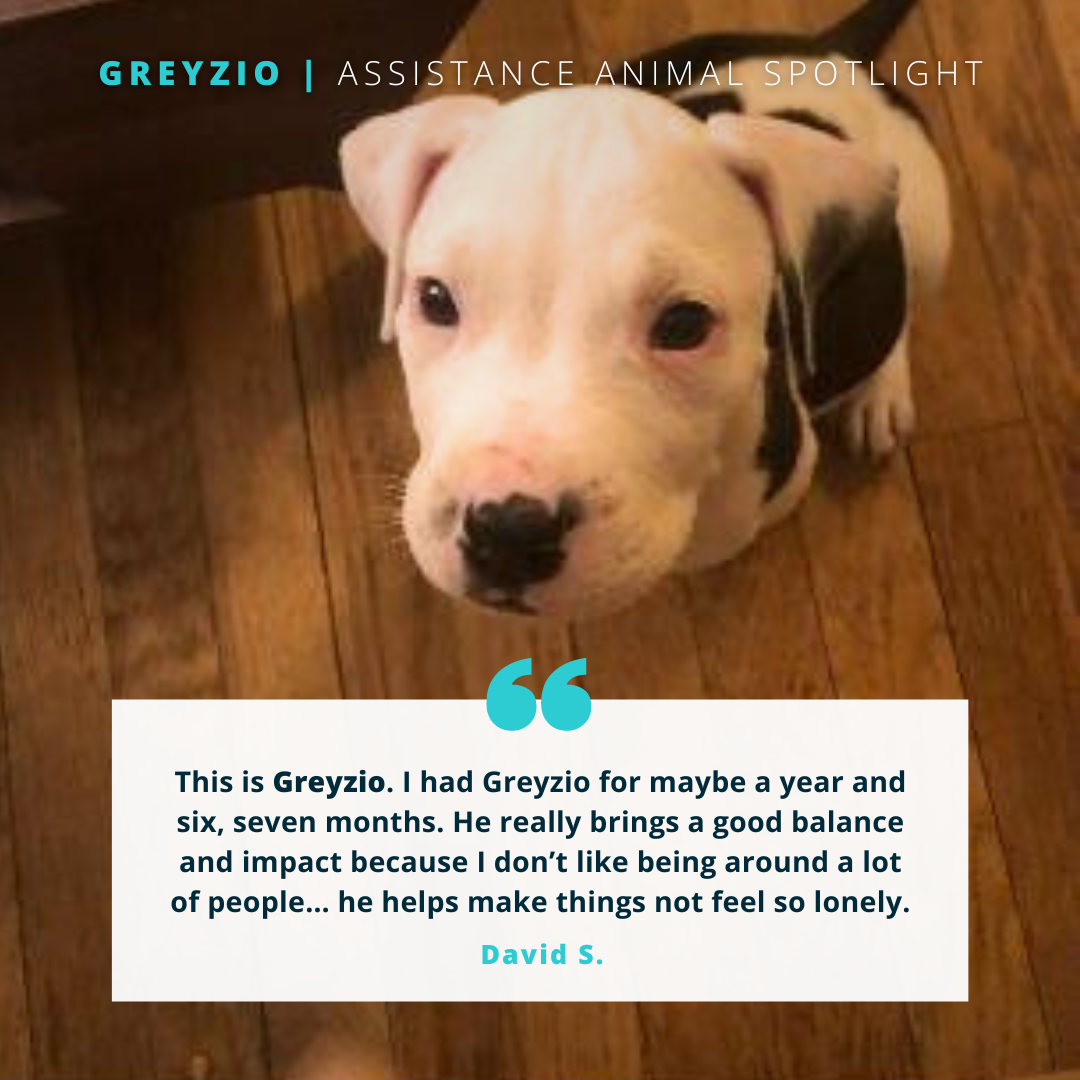
3. “This is Greyzio. I had Greyzio for maybe a year and six, seven months. He really brings a good balance and impact because I don’t like being around a lot of people… he helps make things not feel so lonely.” – David S.
4. “Mercedese and Emmy mean the world to me. They are loyal, in-tune with my needs, and are my best friends.” – Joan

5. “My emotional support pet’s name is Joyy and she is my baby and helps me with panic attacks and depression. She also helps my anxiety with feeling safe. My daughter is an only child that gifted her to me on my birthday last year — [it] was a blessing so I have peace of mind and no fear of being scared and nervous. We love Joyy and thank God for her being in our lives.” – Patricia A.
![Joyy | Assistance Animal Spotlight
A young woman is sitting on an ottoman, hugging a brown and white dog.
Quote reads: "My emotional support pet's name is Joyy and she is my baby and helps me with panic attacks and depression. She also helps my anxiety with feeling safe. My daughter is an only child that gifted her to me on my birthday last year — [it] was a blessing so I have peace of mind and no fear of being scared and nervous. We love Joyy and thank God for her being in our lives." - Patricia A.](https://thehousingcenter.org/wp-content/uploads/2025/07/7-1.png)
If you or someone you know has questions about assistance animals in housing, contact our fair housing advocates for assistance. You can also take a look at our fact sheets and other resources to learn more.
The work that provided the basis for this publication was supported by funding under a grant with the U.S. Department of Housing and Urban Development. The substance and findings of the work are dedicated to the public. The author and publisher are solely responsible for the accuracy of the statements and interpretations contained in this publication. Such interpretations do not necessarily reflect the views of the Federal Government.